English Setter
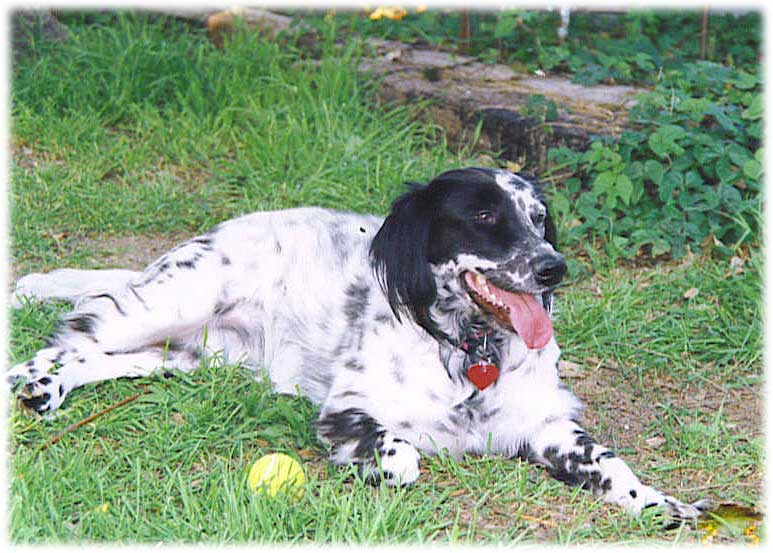
Elegant British bird dog developed to locate game with endurance and a steady set.
| Size | Weight | Height | Lifespan |
|---|---|---|---|
| Large | 45 - 80 lbs | 23 - 27 inches | 11 - 14 years |
| (These are estimates and may vary.) | |||
Origin: United Kingdom
Own a English Setter? Share what activities they enjoy to help other dog owners.
Select up to 5 Activities
Know a English Setter? Share their personality traits to help other dog owners.
Select up to 5 traits
May be a good fit if you:
- Want a dog that is generally responsive to consistent, positive training.
- Are looking for a breed that generally does well with children.
- Want a dog that generally gets along well with other dogs.
Things to consider:
- This breed may not do well when left alone for long periods.
- This breed may be less suited to smaller living spaces.
The English Setter developed from old European setting spaniels used by bird hunters long before modern firearms became common. These dogs searched for game by scent and then crouched or "set" when they located birds. Hunters could approach and cast a net over both the birds and, in some methods, the dog. As firearms replaced nets, setters remained useful because they could locate birds and indicate their position for the hunter. The modern English Setter was shaped particularly during the 19th century by two influential British breeding programs. Edward Laverack spent decades developing a refined, consistent strain that became important to show lines, while Richard Purcell Llewellin used Laverack dogs and other working setters to develop animals noted for field performance. The Llewellin name is still used for certain field-bred English Setters today. The breed's speckled coat pattern is traditionally called belton, a term Laverack helped popularize after a village in northern England. English Setters became successful hunting dogs in North America as well as Britain. Modern show and field lines can look quite different, but both descend from dogs designed to cover substantial ground, locate birds with their noses, and remain steady once game was found.