Pointer (German Wirehaired)
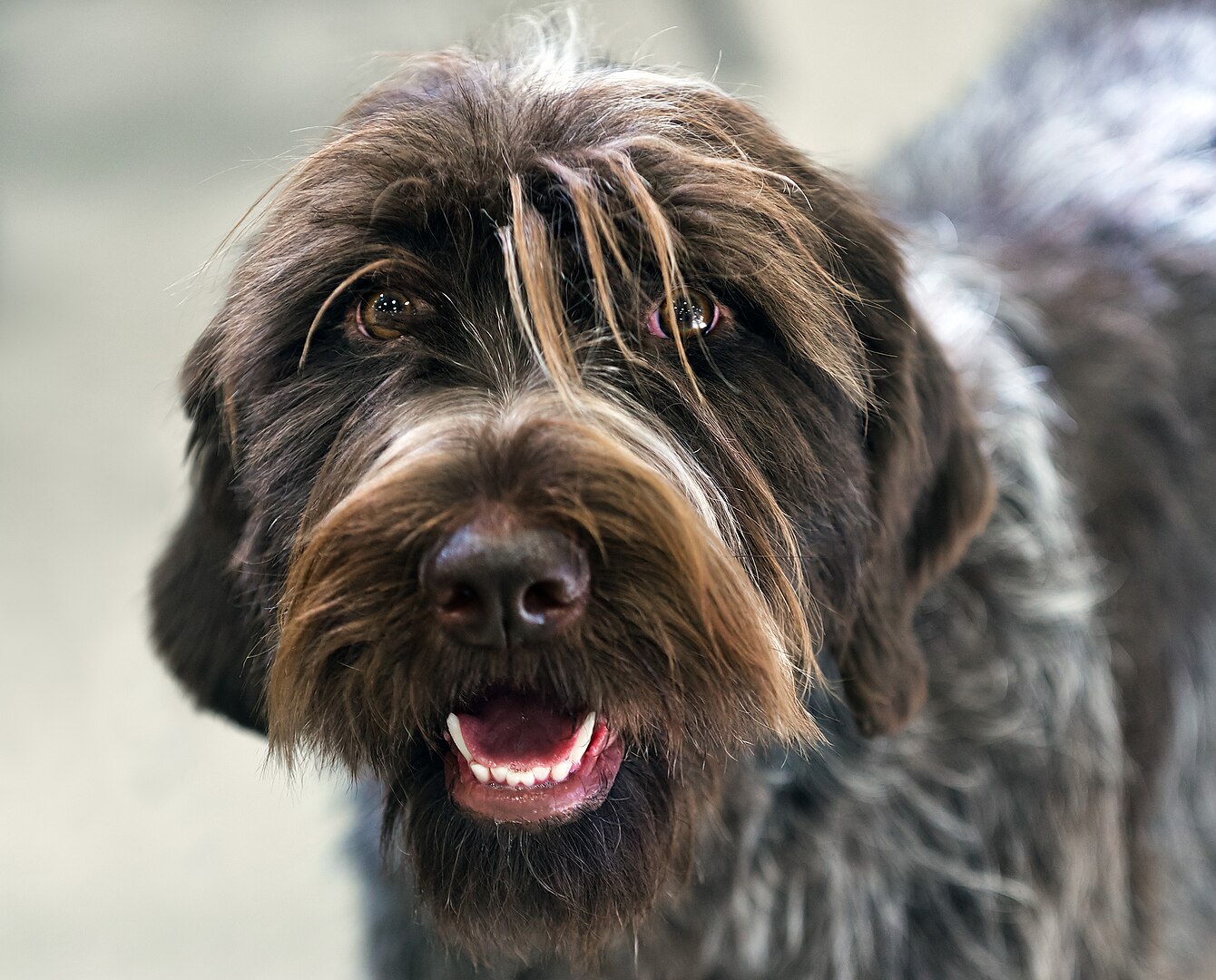
Versatile German hunting dog developed to point, track, and retrieve in harsh terrain.
| Size | Weight | Height | Lifespan |
|---|---|---|---|
| Large | 50 - 70 lbs | 22 - 26 inches | 14 - 16 years |
| (These are estimates and may vary.) | |||
Origin: Germany
Own a Pointer (German Wirehaired)? Share what activities they enjoy to help other dog owners.
Select up to 5 Activities
Know a Pointer (German Wirehaired)? Share their personality traits to help other dog owners.
Select up to 5 traits
May be a good fit if you:
- Want a dog that is generally responsive to consistent, positive training.
- Want a dog that generally gets along well with other dogs.
- Are a first-time dog owner looking for a relatively approachable breed.
Things to consider:
- This breed may be less suited to smaller living spaces.
- This breed tends to need plenty of regular physical activity.
The German Wirehaired Pointer was developed in Germany during the late 19th and early 20th centuries as an exceptionally versatile hunting dog. German hunters wanted one dog capable of locating and pointing game, tracking wounded animals, retrieving on land and from water, and working in difficult weather and terrain. Breeders combined established German hunting dogs and pointing stock while selecting strongly for practical performance. Breeds associated with its development include the Pudelpointer, German Shorthaired Pointer, Griffon-type hunting dogs, and other continental working lines, although the breeding process was more complex than a single fixed recipe. The resulting Deutsch-Drahthaar was distinguished by a harsh, weather-resistant wire coat, protective facial furnishings, strong hunting instinct, and willingness to work closely with a handler. In Germany, the Deutsch-Drahthaar continues to be bred under a demanding performance-testing system. The German Wirehaired Pointer developed as the closely related kennel-club breed known internationally, particularly in North America. The American Kennel Club recognized it in 1959. Its coat is functional rather than decorative, protecting the dog from cold water, brush, and rough ground. The breed's broad skill set reflects the German ideal of a versatile hunting dog capable of performing nearly every major task required before and after the shot.