Basenji
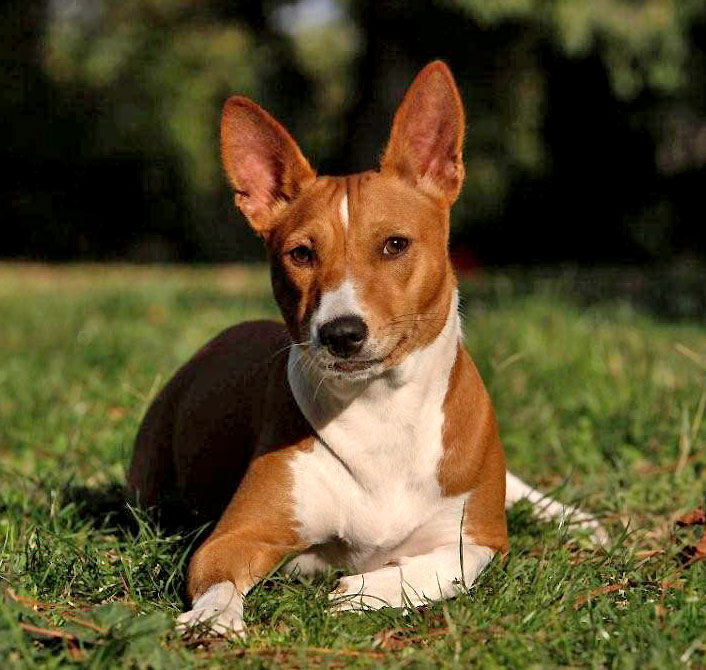
Athletic Central African hunting dog famous for its independence and unusual voice.
| Size | Weight | Height | Lifespan |
|---|---|---|---|
| Small | 22 - 24 lbs | 16 - 17 inches | 13 - 14 years |
| (These are estimates and may vary.) | |||
Origin: Democratic Republic of the Congo
Own a Basenji? Share what activities they enjoy to help other dog owners.
Select up to 5 Activities
Know a Basenji? Share their personality traits to help other dog owners.
Select up to 5 traits
May be a good fit if you:
- Want a dog that is generally responsive to consistent, positive training.
- Are looking for a breed that generally does well with children.
- Are a first-time dog owner looking for a relatively approachable breed.
Things to consider:
- This breed may be less suited to smaller living spaces.
- This breed tends to need plenty of regular physical activity.
The Basenji developed in central Africa, where local hunting dogs worked alongside people for generations. Dogs of this general type were particularly associated with regions of the Congo, where hunters valued their speed, intelligence, sharp senses, and ability to move efficiently through dense vegetation. They could help locate and drive game toward nets, often wearing bells so hunters could track their position in thick cover. European explorers encountered similar dogs during the 19th century, but early attempts to establish them in Britain repeatedly failed, often because imported dogs died from diseases for which they had little immunity. Successful breeding populations were finally established in Britain during the 1930s, with additional African imports later broadening the gene pool. The Basenji is famously described as "barkless," but it is certainly not silent. Its unusual larynx produces a distinctive yodel-like sound often called a baroo, along with numerous other vocalizations. Another unusual trait is that females typically come into season only once each year, more like many wild canids than most domestic breeds. The Basenji's independent nature and strong prey drive remain closely connected to its background as a hunting dog expected to work with considerable freedom from human direction.