Bull Terrier
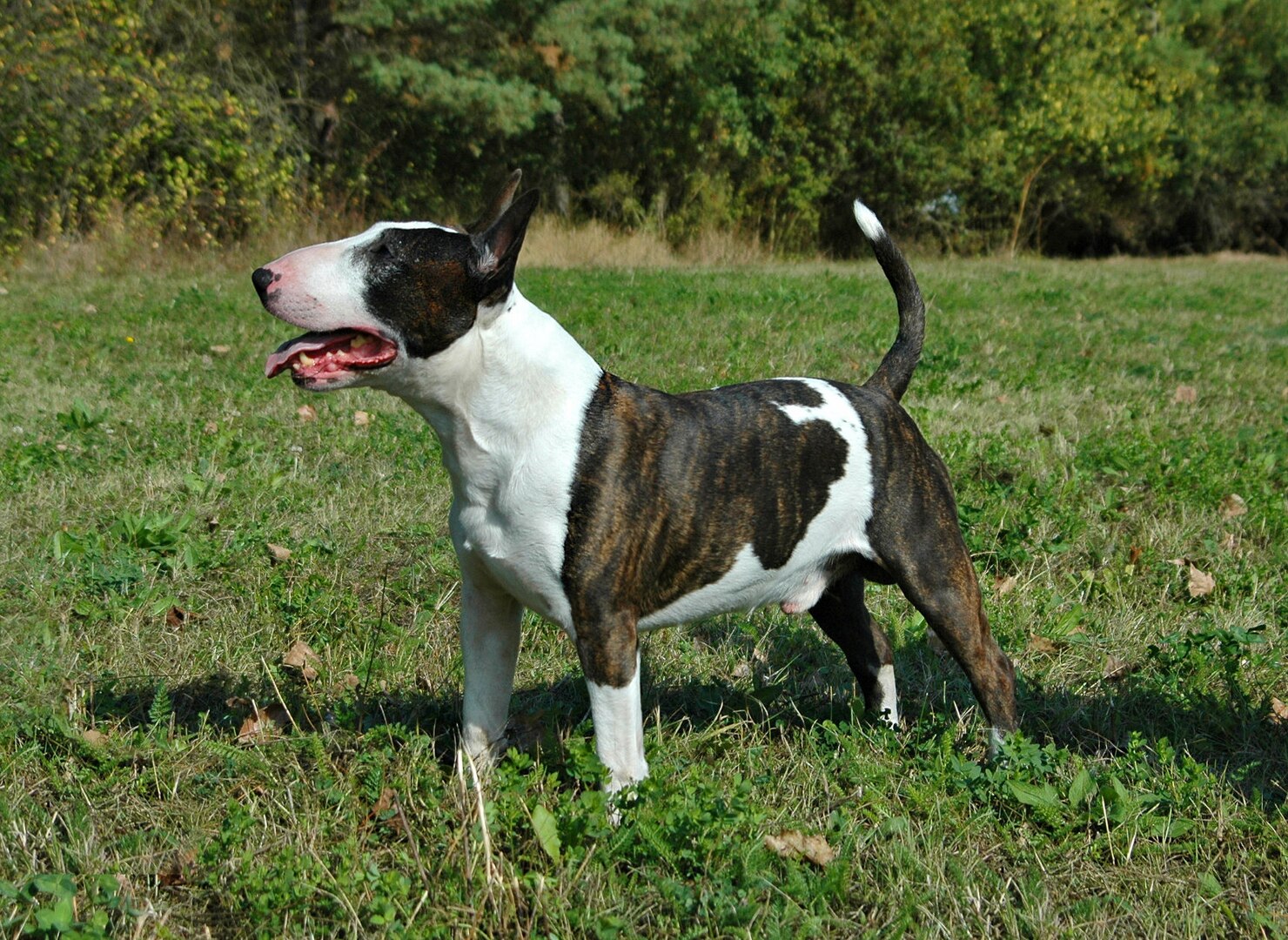
Powerful British terrier famous for its egg-shaped head and playful personality.
| Size | Weight | Height | Lifespan |
|---|---|---|---|
| Large | 50 - 70 lbs | 21 - 22 inches | 12 - 13 years |
| (These are estimates and may vary.) | |||
Origin: United Kingdom
Own a Bull Terrier? Share what activities they enjoy to help other dog owners.
Select up to 5 Activities
Know a Bull Terrier? Share their personality traits to help other dog owners.
Select up to 5 traits
May be a good fit if you:
- Want a dog that is generally responsive to consistent, positive training.
- Are looking for a breed that generally does well with children.
- Are a first-time dog owner looking for a relatively approachable breed.
Things to consider:
- This breed may not do well when left alone for long periods.
- This breed tends to need plenty of regular physical activity.
The Bull Terrier developed in 19th-century Britain from earlier bull-and-terrier dogs. These dogs combined bulldog strength with terrier speed and determination and had roots in the blood sports of the era. After bull-baiting was outlawed in Britain in 1835, dog fighting continued illegally, but breeders also began reshaping bull-and-terrier dogs for other purposes and for the developing world of dog shows. Birmingham breeder James Hinks became especially influential during the 1850s and 1860s. He produced a more refined, predominantly white dog with a cleaner outline than earlier fighting types, helping establish the recognizable Bull Terrier. Later crosses and selective breeding gradually produced the breed's most distinctive feature: its long, curved, egg-shaped head. Coloured Bull Terriers were eventually accepted alongside white dogs after breeders worked to reintroduce colour while maintaining type. By the late 19th century, the Bull Terrier had become fashionable enough to earn a reputation as a gentleman's companion rather than simply a fighting dog. The breed later spread internationally and developed a strong identity as an exuberant companion. Its muscular body still reflects its powerful ancestry, but generations of breeding away from its original blood-sport context helped create the unusually playful, mischievous personality for which modern Bull Terriers are often known.