Central Asian Shepherd Dog
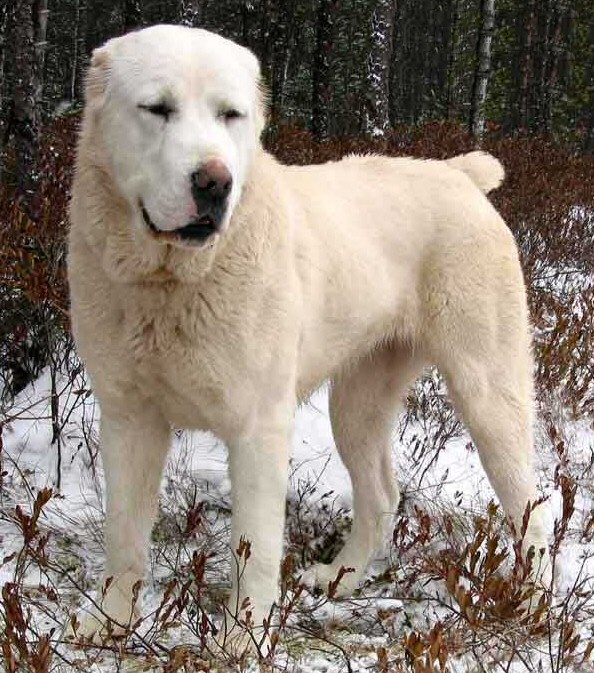
Ancient Central Asian livestock guardian shaped by harsh climates and demanding work.
| Size | Weight | Height | Lifespan |
|---|---|---|---|
| Giant | 85 - 150 lbs | 25 - 30 inches | 12 - 15 years |
| (These are estimates and may vary.) | |||
Origin: Turkmenistan
Own a Central Asian Shepherd Dog? Share what activities they enjoy to help other dog owners.
Select up to 5 Activities
Know a Central Asian Shepherd Dog? Share their personality traits to help other dog owners.
Select up to 5 traits
May be a good fit if you:
- Are looking for a breed that generally does well with children.
Things to consider:
- This breed may not do well when left alone for long periods.
- Regular shedding means you may need to be comfortable with loose hair around the home.
The Central Asian Shepherd Dog developed across an enormous region stretching through parts of modern Kazakhstan, Turkmenistan, Uzbekistan, Kyrgyzstan, Tajikistan, Afghanistan, and neighbouring areas. Rather than being created by one breeder or according to a single early standard, these dogs emerged from generations of livestock-guardian work among pastoral communities. Their job was to remain with herds and protect animals, people, and camps from predators and other threats. Climate and terrain varied dramatically across the region, from deserts and steppes to mountains, producing considerable diversity in local dogs. Survival and working ability mattered far more than uniform appearance. Dogs needed physical strength, endurance, independence, and the judgment to respond to danger without waiting for human instructions. During the Soviet era, efforts were made to classify and standardize regional guardian dogs under a broader Central Asian type, contributing to the modern breed known in Russian as the Sredneaziatskaya Ovcharka. Traditional working populations nevertheless continue to show variation. The Fédération Cynologique Internationale recognizes the Central Asian Shepherd Dog, while the American Kennel Club includes it in the Foundation Stock Service. Its history is unusual among modern breeds because natural conditions and practical pastoral selection played such major roles in shaping the dog long before formal kennel organizations became involved.