Leonberger
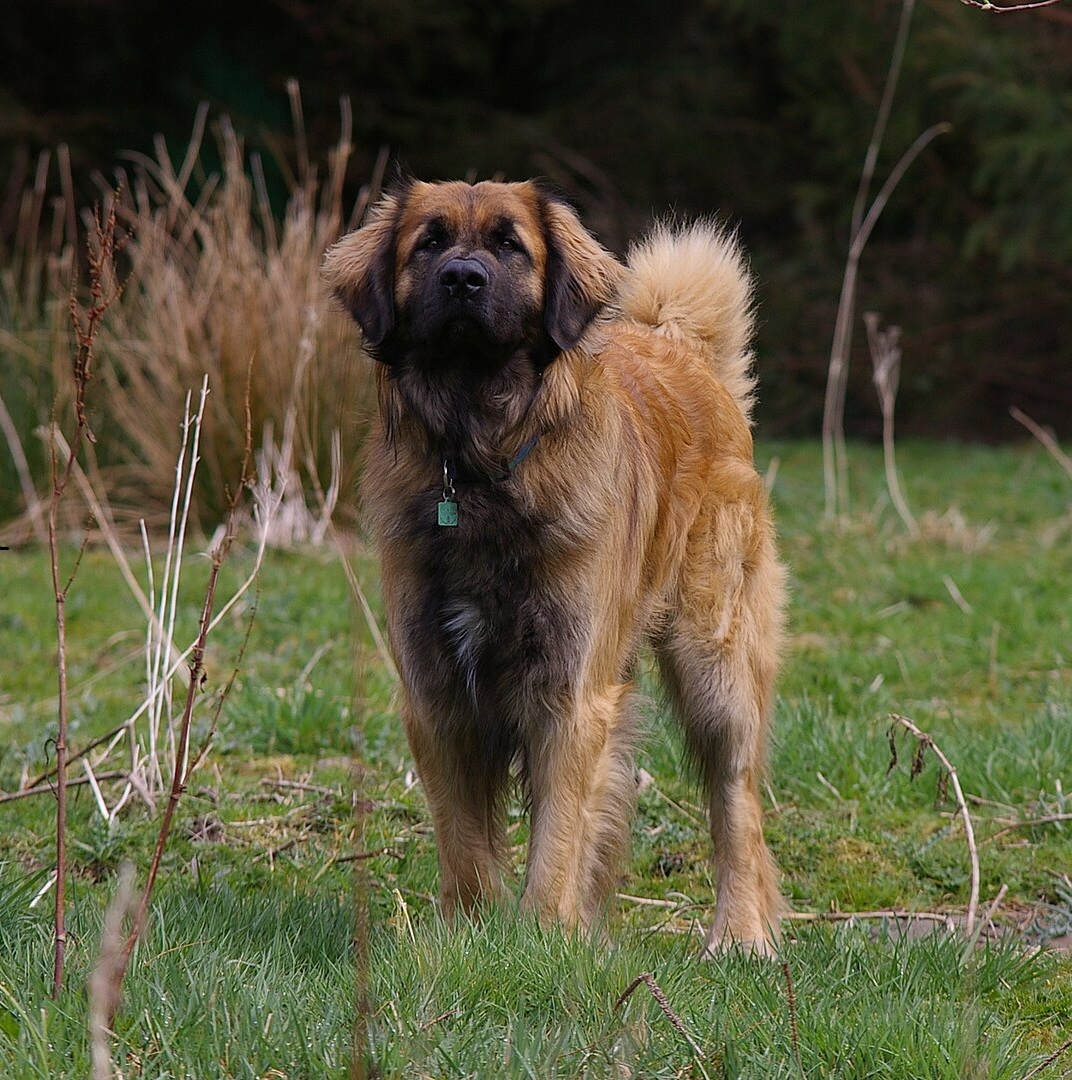
Massive German working dog known for its strength, calm nature, and lion-like coat.
| Size | Weight | Height | Lifespan |
|---|---|---|---|
| Giant | 90 - 170 lbs | 25 - 32 inches | 7 - 10 years |
| (These are estimates and may vary.) | |||
Origin: Germany
Own a Leonberger? Share what activities they enjoy to help other dog owners.
Select up to 5 Activities
Know a Leonberger? Share their personality traits to help other dog owners.
Select up to 5 traits
May be a good fit if you:
- Are looking for a breed that generally does well with children.
- Want a dog that generally gets along well with other dogs.
- Are a first-time dog owner looking for a relatively approachable breed.
Things to consider:
- This breed may not do well when left alone for long periods.
- Regular shedding means you may need to be comfortable with loose hair around the home.
The Leonberger originated in the German town of Leonberg during the 19th century and is closely associated with breeder and businessman Heinrich Essig. Beginning around the 1830s and 1840s, Essig promoted large dogs intended to resemble the lion featured on Leonberg's coat of arms. Accounts of his breeding program traditionally describe crosses involving Saint Bernards, Newfoundlands, and later Pyrenean mountain dogs, although the exact development of the early breed is not documented in complete detail. The impressive dogs became fashionable among European aristocrats and wealthy owners, which helped spread the Leonberger beyond Germany. Despite this elite following, Leonbergers were also capable working dogs used for guarding, pulling carts, and other practical tasks. The two World Wars were disastrous for the breed. Food shortages and destruction left very few breeding animals in Europe, forcing enthusiasts to rebuild the population from surviving dogs after each conflict. Modern Leonbergers descend from those preservation efforts. Their enormous size and lion-like mane still reflect the appearance sought by early breeders, while their strength has allowed them to succeed in draft work and water rescue. The breed therefore combines an unusual origin as a civic symbol with a genuine history of versatile working ability.