Great Dane
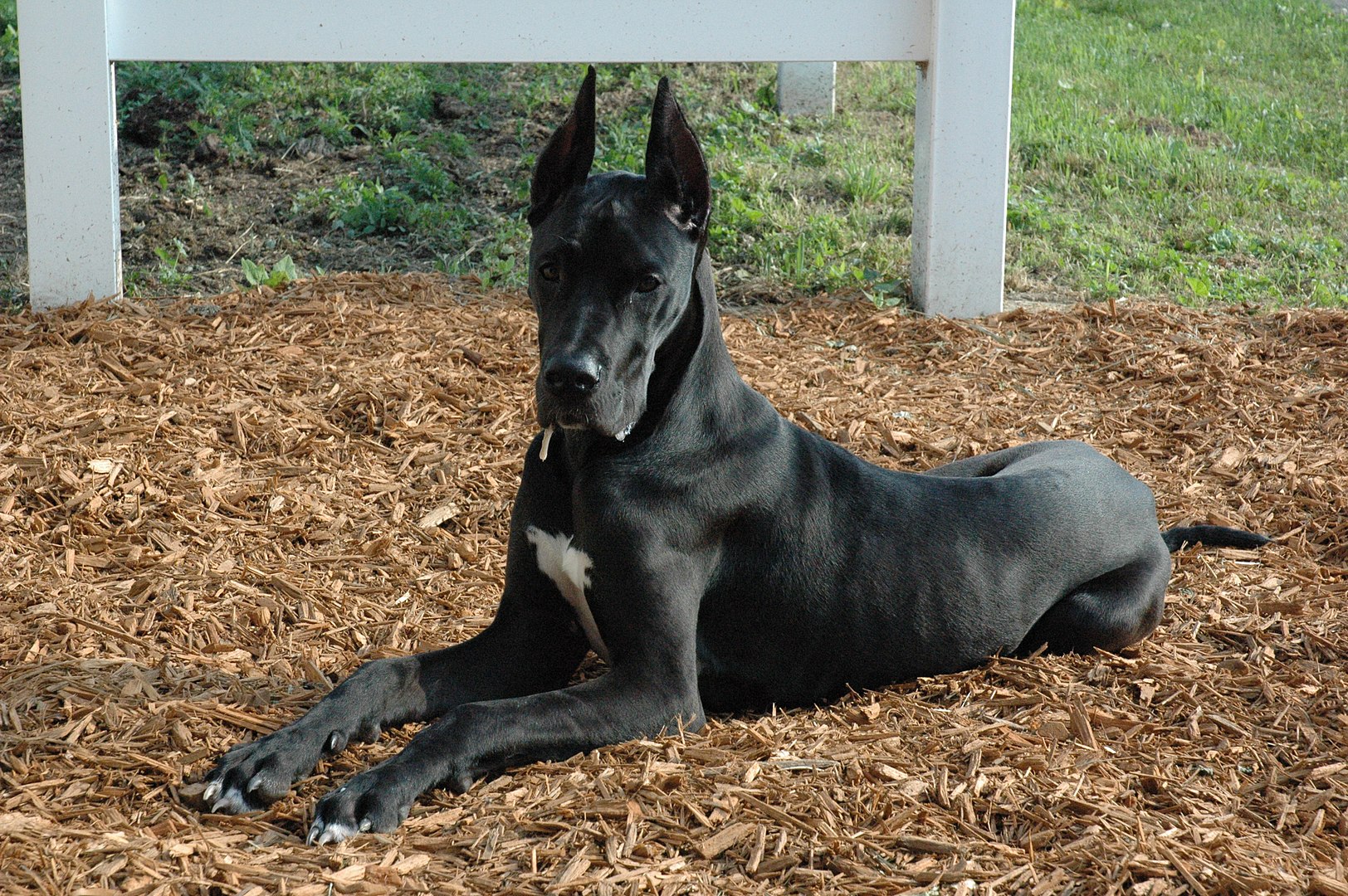
Towering, easygoing companion descended from powerful German hunting dogs.
| Size | Weight | Height | Lifespan |
|---|---|---|---|
| Giant | 110 - 175 lbs | 28 - 32 inches | 7 - 10 years |
| (These are estimates and may vary.) | |||
Origin: Germany
Own a Great Dane? Share what activities they enjoy to help other dog owners.
Select up to 5 Activities
Know a Great Dane? Share their personality traits to help other dog owners.
Select up to 5 traits
May be a good fit if you:
- Are looking for a breed that generally does well with children.
- Are a first-time dog owner looking for a relatively approachable breed.
- Want a breed that tends to adapt well to apartment living.
Things to consider:
- This breed may not do well when left alone for long periods.
Despite its English-sounding name, the Great Dane was developed primarily in Germany. Its ancestors were large mastiff-type hunting dogs used by European nobility, particularly for pursuing dangerous game such as wild boar. A successful boarhound needed an unusual combination of size, strength, speed, and courage, and German nobles bred powerful dogs for that purpose for centuries. Some particularly valued dogs also lived closely with nobles and served as personal guardians. As traditional boar hunting declined, breeders increasingly standardized the dogs for a different future. In 1876, German enthusiasts declared the Deutsche Dogge the country's national breed, and a formal German standard followed in 1881. The name "Great Dane" persisted in English despite the breed having no meaningful Danish origin; in Germany it remains known as the Deutsche Dogge. Breeders gradually refined the old hunting dog into a taller, more elegant type while selecting for a temperament better suited to companionship and showing. The Great Dane Club of America was founded in 1889, making it one of the older American breed clubs. Today's calm companion is considerably removed from the formidable boarhound behind its enormous frame.