Newfoundland
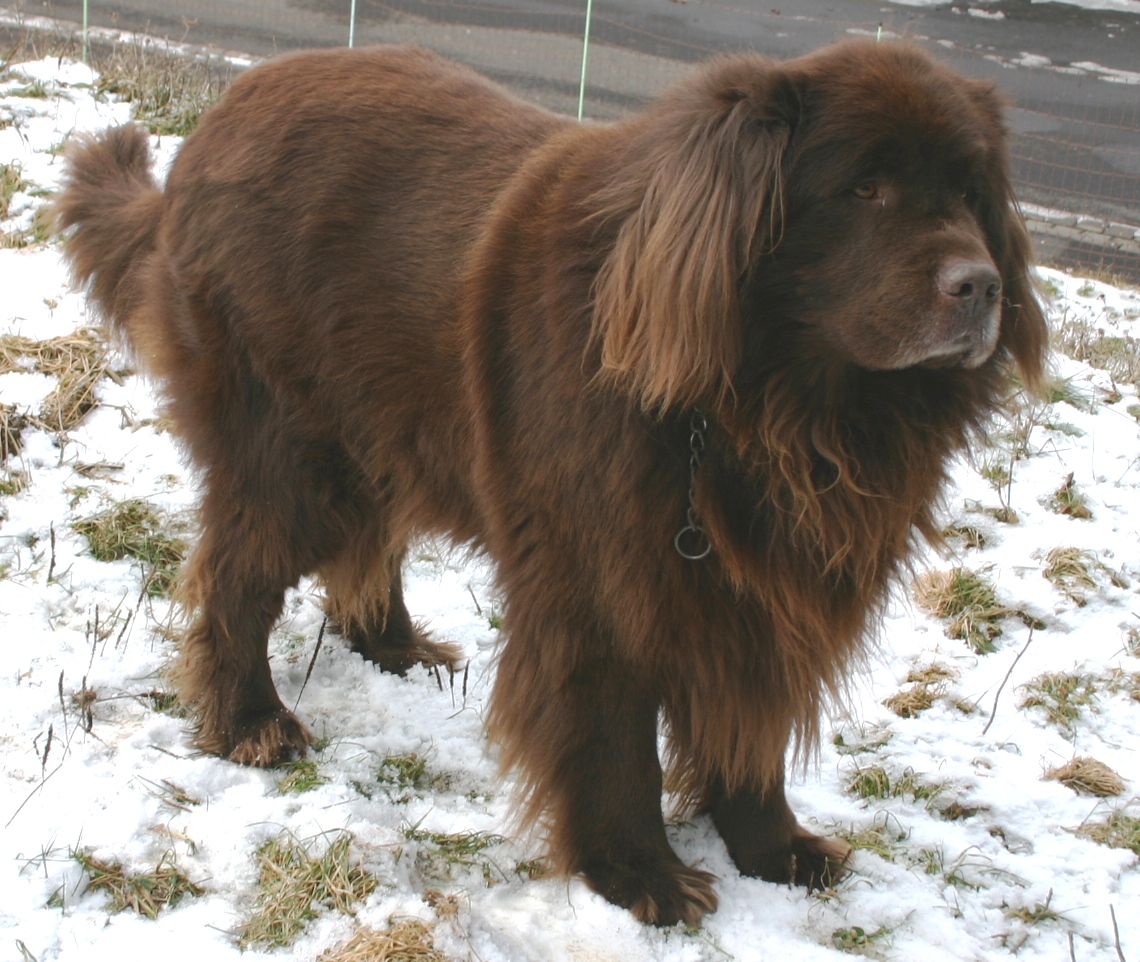
Massive Canadian water dog known for its strength, gentleness, and swimming ability.
| Size | Weight | Height | Lifespan |
|---|---|---|---|
| Giant | 100 - 150 lbs | 26 - 28 inches | 9 - 10 years |
| (These are estimates and may vary.) | |||
Origin: Canada
Own a Newfoundland? Share what activities they enjoy to help other dog owners.
Select up to 5 Activities
Know a Newfoundland? Share their personality traits to help other dog owners.
Select up to 5 traits
May be a good fit if you:
- Want a dog that is generally responsive to consistent, positive training.
- Are looking for a breed that generally does well with children.
- Want a dog that generally gets along well with other dogs.
Things to consider:
- This breed may not do well when left alone for long periods.
- Regular shedding means you may need to be comfortable with loose hair around the home.
The Newfoundland developed on the Canadian island of Newfoundland, where large working dogs became invaluable partners to fishermen. Their exact ancestry is debated, but by the 18th and 19th centuries Newfoundland dogs were well known for their strength, thick coats, swimming ability, and willingness to work in cold Atlantic water. Fishermen used them to retrieve objects, carry lines between boats and shore, and help haul nets and other loads. Their reputation as water rescuers grew naturally from this work. One Newfoundland named Seaman accompanied Meriwether Lewis and William Clark on their famous expedition across North America beginning in 1804, reportedly serving as a hunter and guard along the journey. The breed also became popular in Britain, where breeders helped establish the large, heavy Newfoundland familiar today. Its swimming adaptations include a powerful build and notably webbed feet. Stories of Newfoundlands rescuing people from drowning became a major part of the breed's reputation, and they are still used in organized water-rescue training today. Despite their enormous size, generations of close cooperation with fishermen helped establish the calm, people-oriented temperament for which the breed is now known.