Komondor
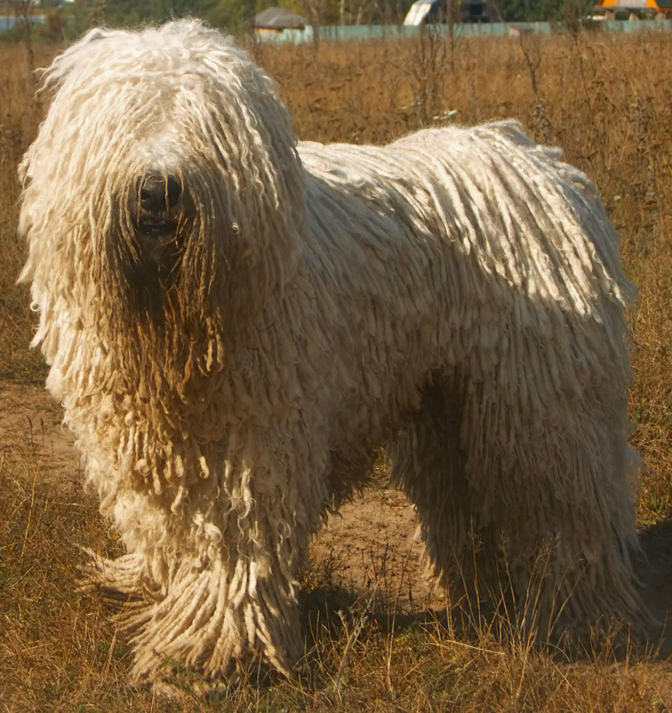
Powerful Hungarian livestock guardian famous for its long, protective corded coat.
| Size | Weight | Height | Lifespan |
|---|---|---|---|
| Giant | Over 80 lbs | 25 - 28 inches | 10 - 12 years |
| (These are estimates and may vary.) | |||
Origin: Hungary
Own a Komondor? Share what activities they enjoy to help other dog owners.
Select up to 5 Activities
Know a Komondor? Share their personality traits to help other dog owners.
Select up to 5 traits
May be a good fit if you:
- Want a dog that is generally responsive to consistent, positive training.
- Are looking for a breed that generally does well with children.
- Are a first-time dog owner looking for a relatively approachable breed.
Things to consider:
- Coat maintenance may require significant regular grooming.
- This breed may be less suited to smaller living spaces.
The Komondor developed in Hungary as a large livestock guardian responsible for protecting sheep from predators. Rather than herding a flock from place to place, the Komondor lived among the animals and independently watched for threats such as wolves. Its exact distant ancestry is uncertain, though the breed has long been associated with pastoral communities of the Hungarian plains. The most remarkable feature of the Komondor is its coat. Puppies begin with softer curls, but as the dog matures the coat naturally separates into long felt-like cords. These cords provide insulation from extreme weather and a substantial layer of protection during confrontations with predators. The white colour also helped the dog blend with sheep and remain distinguishable from darker predators, particularly at night. Komondors suffered severely during the Second World War, when many guarding dogs were killed as farms and properties were overrun. The surviving population was rebuilt by Hungarian breeders after the war, with additional breeding populations later established abroad. Modern Komondors retain the independence expected of livestock guardians: a working dog far from its owner could not wait for instructions before responding to a threat, so generations were selected to observe situations and act on their own judgment.