Clumber Spaniel
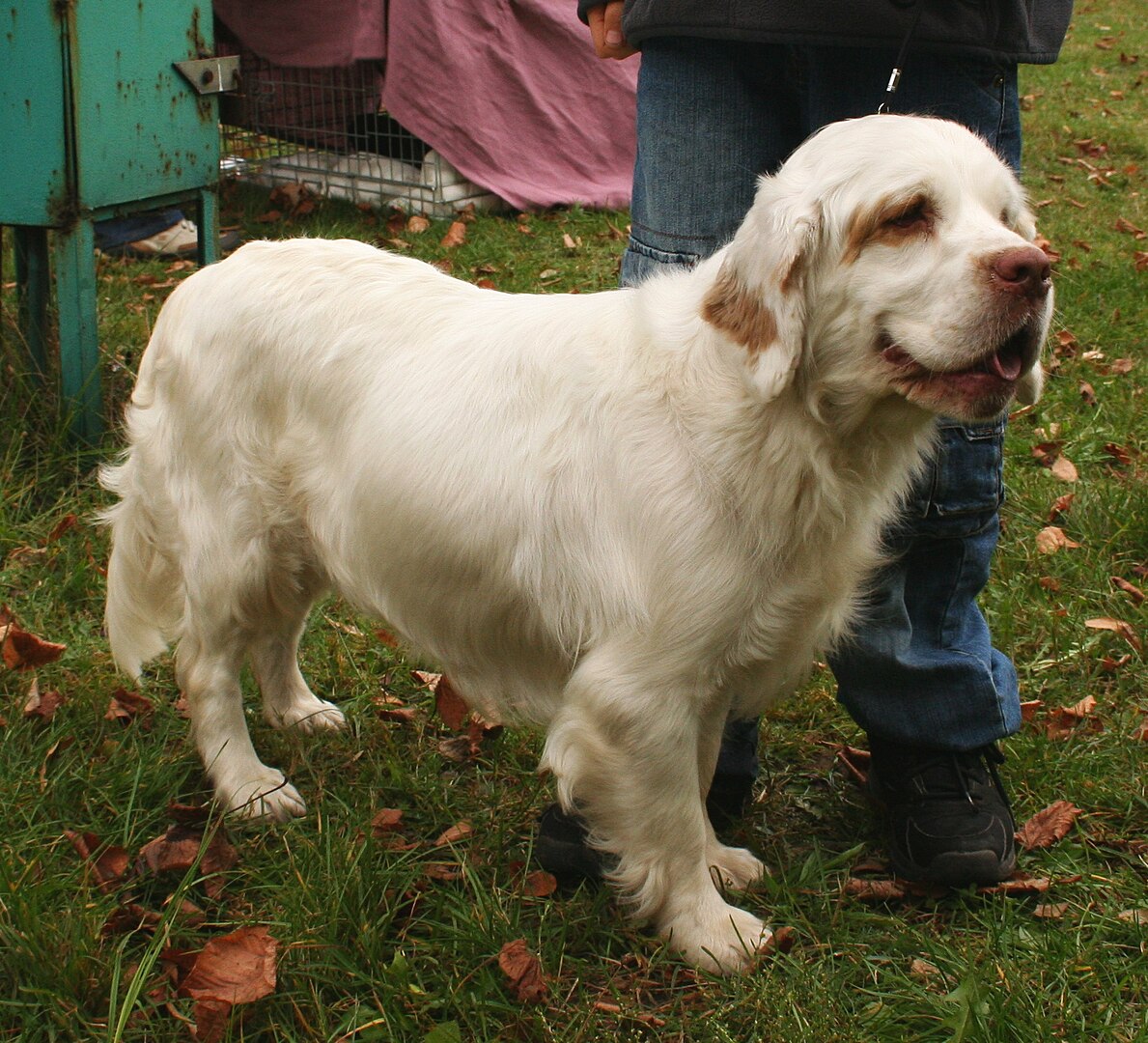
Heavy, powerful British spaniel bred to work slowly through dense hunting cover.
| Size | Weight | Height | Lifespan |
|---|---|---|---|
| Large | 55 - 85 lbs | 17 - 20 inches | 10 - 12 years |
| (These are estimates and may vary.) | |||
Origin: United Kingdom
Own a Clumber Spaniel? Share what activities they enjoy to help other dog owners.
Select up to 5 Activities
Know a Clumber Spaniel? Share their personality traits to help other dog owners.
Select up to 5 traits
May be a good fit if you:
- Want a dog that is generally responsive to consistent, positive training.
- Are looking for a breed that generally does well with children.
- Want a dog that generally gets along well with other dogs.
Things to consider:
- This breed may not do well when left alone for long periods.
- Regular shedding means you may need to be comfortable with loose hair around the home.
The Clumber Spaniel is a heavy, low-set sporting dog whose early history is associated with British aristocratic estates. The breed takes its name from Clumber Park in Nottinghamshire, the estate of the Dukes of Newcastle. A popular story claims that French dogs were sent there during the French Revolution, but firm evidence for that account is limited and the breed's precise origins remain uncertain. What is clear is that Clumber-type spaniels became established in Britain as deliberate, methodical hunting dogs. Rather than racing across open ground, they were built to push steadily through dense vegetation while using their noses to locate and flush game birds. Their white coats made them easy for hunters to see in heavy cover. Clumbers became favourites of several members of the British royal family, including Prince Albert and later King Edward VII, helping raise the breed's profile during the 19th century. They were also among the earliest breeds shown at organized dog exhibitions. The American Kennel Club recognized the Clumber in 1884, making it one of the organization's original recognized breeds. Although uncommon today, the breed still retains its distinctive combination of enormous bone, deliberate movement, scenting ability, and spaniel retrieving instinct.