Dachshund
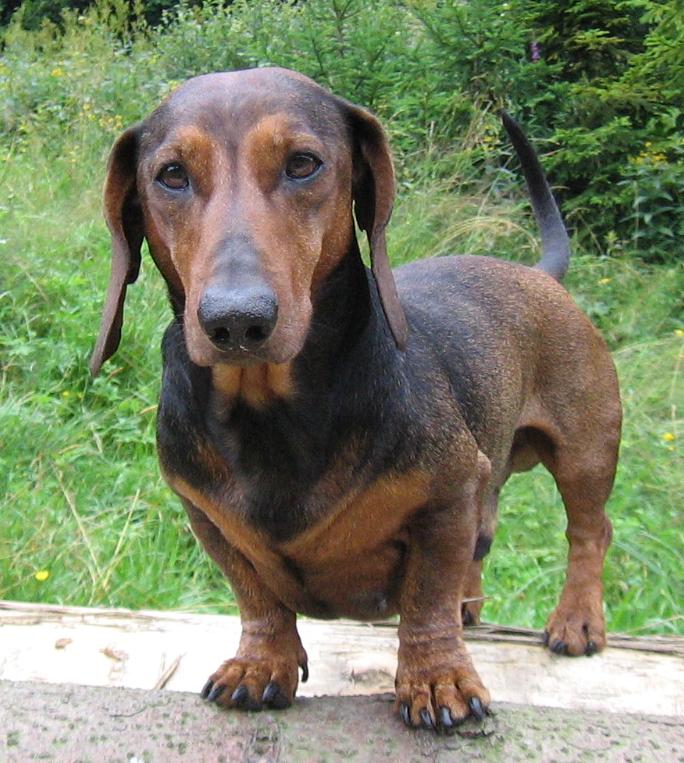
Bold, curious little hound with a long body and strong hunting instincts.
| Size | Weight | Height | Lifespan |
|---|---|---|---|
| Miniature | Under 11 lbs | 5 - 6 inches | 12 - 16 years |
| Standard | 16 - 32 lbs | 8 - 9 inches | 12 - 16 years |
| (These are estimates and may vary.) | |||
Origin: Germany
Own a Dachshund? Share what activities they enjoy to help other dog owners.
Select up to 5 Activities
Know a Dachshund? Share their personality traits to help other dog owners.
Select up to 5 traits
May be a good fit if you:
- Want a dog that is generally responsive to consistent, positive training.
- Are a first-time dog owner looking for a relatively approachable breed.
- Want a breed that tends to adapt well to apartment living.
Things to consider:
- This breed may not do well when left alone for long periods.
The Dachshund was developed in German-speaking Europe as a hunting dog capable of pursuing quarry both above and below ground. Its name is wonderfully literal: "Dachs" means badger and "Hund" means dog. By the 17th and 18th centuries, German hunters were deliberately developing low-legged dogs that could follow scent to a burrow and enter tight underground spaces. A useful badger dog needed far more than short legs. It required a strong front end for digging, enough courage to confront dangerous quarry underground, a good nose, and a voice that allowed the hunter to follow what was happening out of sight. Dachshunds were also used on animals other than badgers, including foxes and rabbits, and to track wounded game. Over time different sizes and coat types were developed for different conditions and quarry. The modern Dachshund is usually kept as a companion, but its characteristic shape, determination, digging instinct, and tendency to follow its nose all make much more sense when viewed through its original job.