German Shepherd
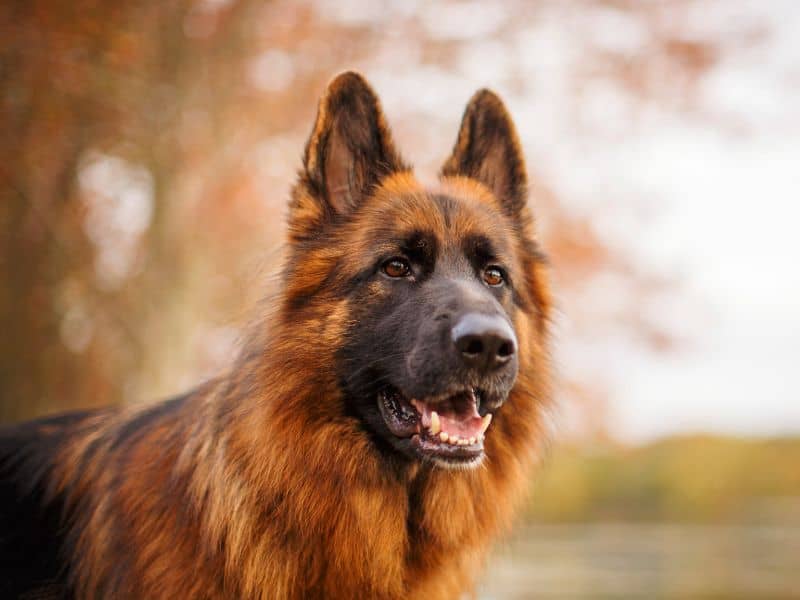
Intelligent, loyal working dog known for its versatility and trainability.
| Size | Weight | Height | Lifespan |
|---|---|---|---|
| Large | 50 - 90 lbs | 22 - 26 inches | 12 - 14 years |
| (These are estimates and may vary.) | |||
Origin: Germany
Own a German Shepherd? Share what activities they enjoy to help other dog owners.
Select up to 5 Activities
Know a German Shepherd? Share their personality traits to help other dog owners.
Select up to 5 traits
May be a good fit if you:
- Want a dog that is generally responsive to consistent, positive training.
- Are looking for a breed that generally does well with children.
- Are a first-time dog owner looking for a relatively approachable breed.
Things to consider:
- Regular shedding means you may need to be comfortable with loose hair around the home.
- This breed tends to need plenty of regular physical activity.
The modern German Shepherd was deliberately developed in Germany near the end of the 19th century, when regional shepherd dogs varied considerably in appearance and working style. Cavalry officer Max von Stephanitz wanted to create a standardized German working dog, placing usefulness, intelligence, and working ability ahead of appearance alone. In 1899, he encountered a shepherd dog named Hektor Linksrhein at a dog show and was impressed by the dog's appearance, intelligence, and character. Von Stephanitz purchased him, renamed him Horand von Grafrath, and made him the foundation dog of his new breeding program. That same year, von Stephanitz and Artur Meyer founded the Verein für Deutsche Schäferhunde, the German Shepherd breed club. As traditional shepherding work declined, von Stephanitz promoted the breed for other jobs rather than allowing it to lose its purpose. German Shepherds subsequently became prominent in police and military work and later in search and rescue, assistance work, competitive dog sports, and family life.